CPQ software is a $3B market but choosing the wrong platform costs far more than the software itself.
It shows up in integration chaos, manual workarounds, and quote-to-delivery gaps that quietly drain revenue quarter after quarter. Most enterprises only see the impact when renewals arrive, costs rise, and the ROI becomes harder to justify.
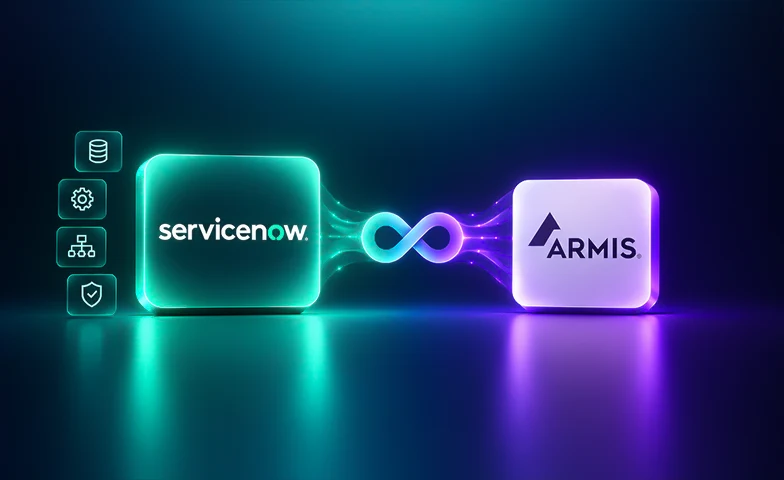
In 2026, two platforms dominate this conversation: Salesforce CPQ and ServiceNow CPQ. Both are enterprise-grade with advanced capabilities across product configuration, pricing, approvals, and quote automation. But they are built on fundamentally different philosophies; one is rooted in CRM-led selling, the other in enterprise workflows and operational execution.
The conversation became even more urgent in March 2025, when Salesforce CPQ officially entered End of Sale (EOS), ending new customer licensing. For enterprises evaluating their next move, the question is no longer whether to rethink CPQ, but what comes next.
In this blog, we compare ServiceNow CPQ and Salesforce CPQ across features, cost, migration, and long-term strategic fit, so you can make the right platform decision in 2026.
What is CPQ (Configure, Price, Quote)?
CPQ or Configure, Price, Quote is enterprise software that automates the most error-prone parts of the sales cycle.
When a deal involves complex products, custom pricing, multi-tier approvals, or bundled services, manual quoting breaks down fast. CPQ eliminates that by giving sales and operations teams a structured, rules-driven engine to configure the right product, apply accurate pricing, and generate a professional quote without chasing spreadsheets or waiting on finance.
For enterprises, the value goes beyond speed. CPQ reduces revenue leakage, enforces pricing governance, and creates a repeatable process from first quote to final approval. Done right, more than a sales tool, it functions as an operational backbone.
ServiceNow CPQ: Core Capabilities
Built natively on the Now Platform, ServiceNow CPQ goes beyond quoting. It connects the entire revenue cycle, from product configuration to order fulfilment, within the same operational ecosystem your IT and service teams already run on.
1. Product Catalog and Configuration: ServiceNow CPQ offers a centralised, visual product catalog where complex offerings like bundles, subscriptions, and service packages are configured through rules-based logic. Sales and operations teams work from the same catalog, eliminating version conflicts and pricing discrepancies.
2. Dynamic Pricing and Discount Controls: Pricing rules are built directly into the platform. Discounts require structured approvals, margin thresholds are enforced automatically, and pricing exceptions are tracked giving finance and RevOps full visibility without manual intervention.
3. Guided Selling: ServiceNow CPQ uses AI-driven recommendations to help sales teams configure the right solution for each customer. It reduces configuration errors, shortens deal cycles, and ensures reps are not left to interpret complex product rules on their own.
4. Automated Approval Workflows: Multi-tier approval chains across sales, legal, finance, and leadership are automated through Flow Designer. Approvals move faster, bottlenecks are visible, and nothing gets lost in an email thread.
5. Order Management and Fulfilment: This is where ServiceNow CPQ separates itself. Once a quote is approved, the platform triggers the delivery workflow. Provisioning, task assignment, and service fulfilment happen within the same system, closing the gap between what was sold and what gets delivered.
6. Self-Service Portal: Customers and partners can configure, price, and request quotes independently through a branded self-service portal, reducing sales team dependency for routine transactions and accelerating the buying process.
7. Native Platform Integration: ServiceNow CPQ integrates natively with ITSM, ITOM, CSM, and other Now Platform modules. Without middleware or third-party connectors, ServiceNow operates on a unified platform, a single data model, and one trusted source of truth.
Make Your CPQ Decision with Clarity
Salesforce CPQ: Core Capabilities
Salesforce CPQ is built where most deals begin inside the CRM. For sales-led organisations, that proximity is its greatest strength. Reps work inside the same environment they use every day, and quoting becomes a natural extension of the sales process rather than a separate workflow.
1. CRM-Native Quoting: Salesforce CPQ lives inside Sales Cloud, giving sales teams a seamless experience from opportunity to quote without switching platforms. Pipeline data, customer history, and quote activity sit in one place reducing friction for reps and improving forecast accuracy for leadership.
2. Product and Bundle Configuration: Sales reps can configure complex product bundles, subscriptions, and add-ons through a guided interface. Pricing rules, compatibility constraints, and product relationships are enforced automatically ensuring only valid product combinations and approved pricing structures make it into customer quotes.
3. Subscription and Amendment Management: Where Salesforce CPQ genuinely excels is in subscription lifecycle management. Renewals, co-terming, amendments, and upgrades are handled with precision making it a strong fit for SaaS and recurring revenue businesses where contract changes are frequent and commercially sensitive.
4. Pricing and Discount Governance: Salesforce CPQ supports multi-dimensional pricing including list price, partner price, discount schedules, and contracted rates with approval rules that enforce governance before a quote leaves the building. Sales managers get visibility; finance gets control.
5. Quote Generation and Document Automation: Salesforce CPQ automatically generates branded, customer-ready proposals from configured quotes. With customizable templates and integrations with e-signature platforms like DocuSign, teams can move from quote approval to contract execution without disrupting the sales workflow.
6. AI-Driven Deal Intelligence: For organizations invested in the Salesforce ecosystem, AI capabilities through Salesforce Einstein can complement CPQ with deal insights, pricing recommendations, and stronger pipeline visibility helping sales teams make faster, data-driven decisions.
7. Revenue Cloud Integration: Salesforce CPQ can extend into Salesforce Revenue Cloud for billing, contract management, and order orchestration. For enterprises already standardized on Salesforce, it creates a natural path toward broader revenue transformation.
Head-to-Head: Key Differences Between Salesforce CPQ and ServiceNow CPQ
Salesforce CPQ and ServiceNow CPQ may belong to the same category, but beneath the surface, they operate with very different DNA. Here’s how the two platforms compare across every dimension that matters to enterprise decision-makers.
| Aspect | Salesforce CPQ | ServiceNow CPQ |
| Platform home | Lives inside Salesforce Sales Cloud, CRM-native by design | Built on the Now Platform, natively connected to ITSM, ITOM, and CSM workflows |
| Primary user | Sales reps, sales ops, and commercial teams built around deal-centric selling | Sales, RevOps, IT, and operations teams built for cross-functional execution |
| Quote-to-fulfilment | Quote execution typically extends through additional Salesforce modules or ecosystem integrations | Can extend beyond quoting into provisioning, fulfilment, and service delivery workflows on the same platform |
| Product configuration | Strong bundle, subscription, and guided configuration within the Salesforce sales ecosystem | Rules-based product and service configuration with a unified view across sales and operations |
| Subscription and renewals | Strong subscription lifecycle capabilities including amendments, co-terming, and renewals | Supports subscription use cases, though less mature for highly complex recurring revenue models |
| Approval workflows | Approval workflows managed within the Salesforce sales ecosystem | Enterprise-wide approval automation through Flow Designer across business functions |
| Integration | Often relies on APIs, middleware, or ecosystem integrations for ERP, billing, and service workflows | Native across the Now Platform, with APIs and connectors for external enterprise systems |
| AI capabilities | AI capabilities through Salesforce Einstein support deal insights, forecasting, and pricing decisions | Now Intelligence supports workflow automation, bottleneck detection, and operational recommendations |
| Customization | Deep customization through Flow, configuration tools, and Apex for complex enterprise use cases | Low-code configuration through Flow Designer with platform extensibility |
| Licensing model | Primarily user-based licensing, with costs tied to seats and add-on modules | Platform-based licensing that varies by product scope, usage, and enterprise agreements |
| End of Sale status | Entered End of Sale (EOS) in March 2025. No new customer licensing available | Actively developed with ongoing product investment and roadmap support |
The table tells most of the story. But three points need to be stated clearly:
- ServiceNow CPQ extends far beyond quoting. It supports fulfilment, provisioning, and cross-functional execution, all on a single platform.
- Its governance and approval workflows operate across the enterprise. They are not confined to the sales team, which makes it easier to align sales, operations, finance, and service.
- Salesforce CPQ is no longer available to new customers. It entered End of Sale in March 2025, making long-term platform planning an important consideration.
Which Should You Choose? A Decision Framework
The right choice depends entirely on how your business is structured, not on which platform has the longer feature list.
Salesforce CPQ, or its successor, Revenue Cloud makes sense if your organisation is entirely sales-led, deeply embedded in the Salesforce ecosystem, and your revenue model revolves around subscription amendments, renewals, and SaaS-style contract management. If quoting begins and ends within your sales team, Salesforce’s CRM-native experience is a genuine advantage.
ServiceNow CPQ is the stronger long-term fit if your organisation runs on the Now Platform, sells complex products or services, and needs quoting to connect directly to operational delivery. For enterprises where IT, RevOps, or Operations share ownership of the revenue process, ServiceNow CPQ does what Salesforce CPQ was never designed to do, it closes the gap between what was sold and what gets delivered.
For organisations currently using Salesforce CPQ, the March 2025 End of Sale introduces an important strategic consideration. Continuing on a platform with limited future investment may maintain short-term continuity, but it also shapes your long-term revenue operations roadmap.
If you are evaluating CPQ for the future, the distinction becomes clear. One platform continues to evolve with active product investment and a defined roadmap. The other is approaching the end of its lifecycle.
The Best CPQ Decision Is an Informed One.
The CPQ Crossroads: Choosing the Right Revenue Platform for 2026
CPQ is no longer a sales tool conversation. It is a platform strategy decision: one that directly impacts how your operations run, how your teams collaborate, and how efficiently your business converts a quote into delivered value.
Salesforce CPQ’s End of Sale has made the timeline real. The enterprises that move with a clear plan will have options. The ones that wait will have fewer.
For organisations evaluating ServiceNow CPQ or planning a migration from Salesforce, the next step is not another comparison. It is a conversation with someone who has done this before.
As a certified ServiceNow partner, Aelum brings the implementation depth and strategic clarity to help you make this decision with confidence and execute it without disruption.
Let’s talk. Schedule a free CPQ consultation with Aelum today!
Frequently asked questions
What is the best CPQ software in 2026?
The best CPQ platform depends on your operating model. Salesforce CPQ remains strong for CRM-led sales and subscription businesses, while ServiceNow CPQ is better suited for enterprises that need quoting, fulfilment, and operational workflows on one platform.
Has Salesforce CPQ been discontinued?
Salesforce CPQ has not been discontinued for existing customers, but it entered End of Sale (EOS) in March 2025. New customers can no longer purchase licenses, making long-term platform planning a priority for current users.
How is ServiceNow CPQ different from Salesforce CPQ?
Salesforce CPQ is built around CRM-driven sales workflows, while ServiceNow CPQ extends beyond quoting into fulfilment, approvals, and enterprise operations. The core difference is sales execution versus end-to-end operational execution.
How long does a CPQ implementation take?
A typical CPQ implementation takes 8–12 weeks for mid-market deployments and 3–6 months for enterprise environments. Timelines depend on product complexity, integrations, custom workflows, and migration requirements.